When something happens to your roof, the first instinct for a lot of homeowners is to call their insurance company. That is not always the wrong move, but it is not always the right one either. Filing a claim has consequences beyond just the current repair, and understanding when it makes sense versus when you are better off handling it out of pocket can save you significant money over the long run.
Standard homeowners' insurance covers sudden, accidental damage from covered perils. In Arizona, the most common covered events for roofing are:
Hail damage
Wind damage from storms including monsoons
Falling objects such as a tree or debris
Fire
Certain types of water intrusion resulting from a covered event
Normal wear and tear over time
Damage resulting from lack of maintenance
Roof age — many policies reduce or eliminate coverage for roofs over a certain age
Pre-existing damage that was present before your policy
Here is what most people do not think about when they file a claim: your insurance history follows you. Filing multiple claims in a short window can result in your rates increasing significantly, your deductible going up at renewal, or in some cases, your carrier choosing not to renew your policy at all. In a market where homeowners insurance in Arizona is already expensive and becoming more so, a claim history that makes you look high-risk has real financial consequences.
As a general rule, if the repair cost is at or near your deductible, or only modestly above it, paying out of pocket is often the smarter financial move. You protect your claim history for when you actually need it.
Hail damage is widespread and visible across multiple areas of your roof.
A storm event caused significant damage to a large portion of your roofing system.
The repair estimate is substantially higher than your deductible — typically at least twice the amount.
A clearly covered event caused damage that threatens the structural integrity of your home.
The damage is limited to a small area and the repair cost is close to your deductible.
The damage is the result of age or wear, not a specific event — this likely will not be covered anyway.
You have filed another claim in the past two to three years.
Your roof is older and a claim may trigger a depreciation calculation that leaves you with very little after the deductible.
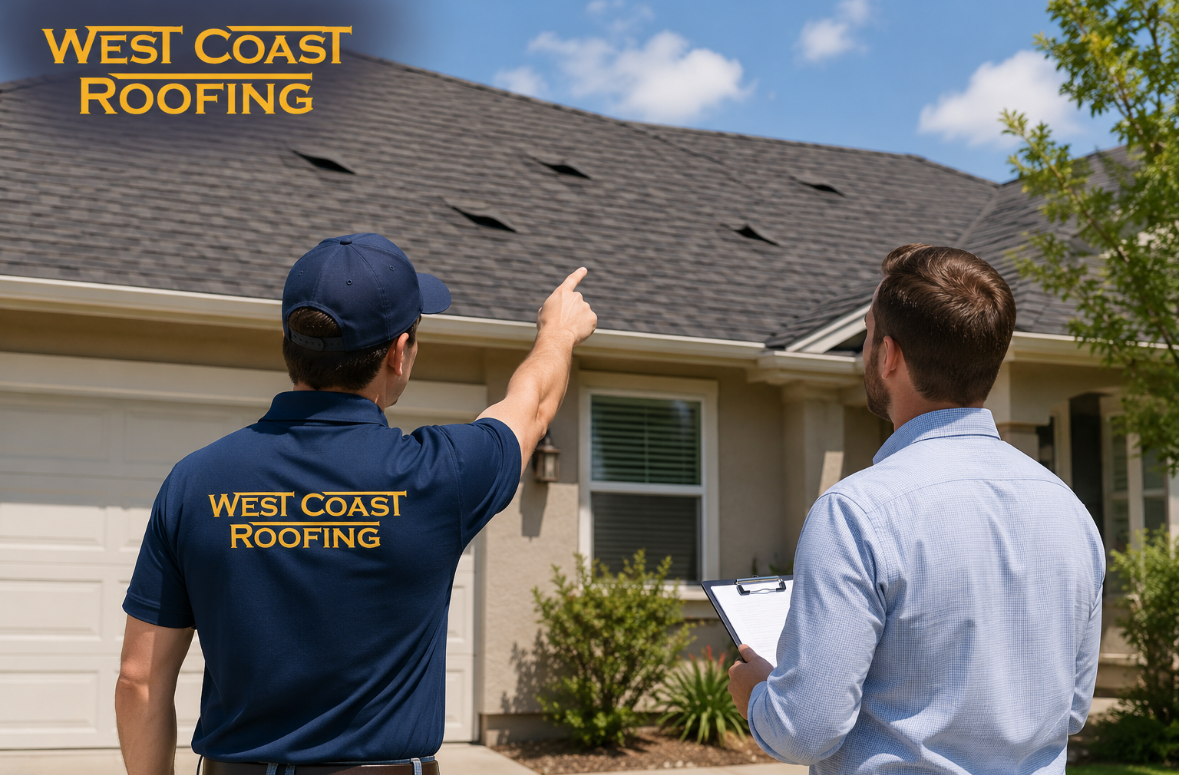
If you do file a claim, you have the right to have a contractor present when the adjuster inspects your roof. In fact, it is often in your interest to have one there. Adjusters are not always roofing experts, and having a knowledgeable contractor walk the roof alongside them can ensure damage is not overlooked.
One important note: be cautious of contractors who proactively solicit your business after a storm and offer to handle your entire insurance process for you. While there are legitimate public adjusters, arrangements where a contractor promises to waive your deductible or handle everything through insurance without your involvement can put you in a difficult legal and financial position. Stay involved in your own claim.
If you have experienced storm damage and are not sure whether to file a claim, West Coast Roofing offers free inspections. We will give you an honest assessment of the damage and what a repair would cost so you can make an informed decision.


 BēST Roofer Marketing