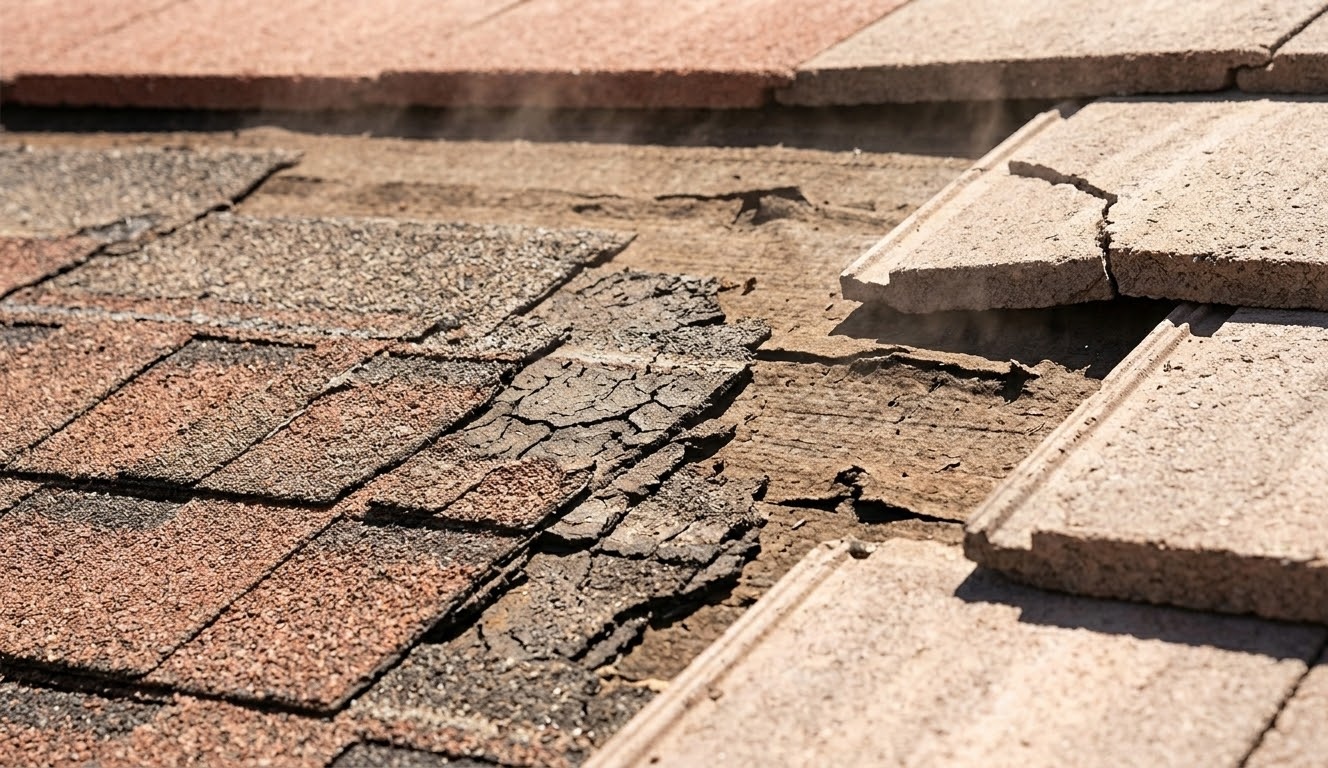
Most roofing systems are designed and tested with average climates in mind. However, Tucson and the surrounding Southern Arizona areas are anything but average.
Between sustained summer temperatures well above 100°F, intense UV radiation, and the extreme thermal cycling that happens when the sun goes down and temperatures drop 30°F to 40°F overnight, Arizona roofs age faster than almost anywhere else in the country. Understanding how this intense heat affects different residential roofing systems can help you make better decisions regarding maintenance, timely roof repairs, and knowing when a full roof replacement becomes unavoidable.
Asphalt shingles are the most common choice for residential roofing nationwide, but they face unique challenges in the desert.
Granule Loss: The asphalt binder that holds the protective granules in place softens under extreme desert heat, causing the granules to shed faster than they would in a moderate climate.
Loss of UV Protection: Those granules are not just decorative—they provide crucial UV protection. Once they start washing into your gutters in significant quantities, your shingles degrade much faster than the manufacturer's standard timeline assumes.
Lifespan Expectation: In a mild climate, a quality asphalt shingle roof can easily last 25 to 30 years. In the Tucson area, a realistic lifespan is closer to 20 to 25 years, heavily depending on your attic ventilation, roof color, and roof pitch.
Concrete and clay tile roofing systems are significantly better suited to the harsh Arizona heat than asphalt. Tile does not soften or shed material, and the natural air gap created between the tile and the underlying deck provides an excellent thermal buffer. This durability is exactly why tile is so dominant across Tucson.
The Hidden Vulnerability: The main point of failure in a tile system isn't the tile itself—it’s the underlayment beneath it.
Underlayment Breakdown: Intense heat accelerates the breakdown of the felt or synthetic underlayment over time. When the underlayment fails, you face a severe water intrusion risk, even if your tiles look perfectly fine from the ground.
Most tile underlayments in Arizona require professional attention or roof repair around the 20 to 25-year mark, even if the tiles themselves are still in great shape.
Flat roofs take the most direct, brutal hit from the Arizona sun. The most common residential flat roofing systems in Tucson are single-ply and two-ply modified bitumen membrane systems, which require protective coatings to extend their lifespan.
Thermal Cycling: These systems experience massive thermal expansion and contraction daily as temperatures swing from cool mornings to peak afternoon heat. Over time, this constant movement stresses seams, flashings, and roof penetrations—which is where nearly every flat roof leak originates.
The Importance of Coating: Dark, uncoated surfaces on a Tucson roof can easily reach 150°F to 180°F, accelerating UV degradation and driving up your home's cooling costs. A protective recoat every 3 to 5 years shields the membrane, reflects solar heat, and adds years to the system's life.
For standard residential flat roofs, homeowners should plan around a 20-year roof replacement window for single-ply, two-ply, and hot mop systems. While TPO is available as a premium, low-maintenance alternative (particularly for larger or commercial applications), most residential flat roofs in our area rely on membrane systems that benefit most from consistent recoating.
From a material degradation standpoint, metal roofs handle desert heat better than almost anything else. However, thermal expansion is still a major factor.
Because metal expands and contracts dramatically with temperature fluctuations, a proper installation is critical. A qualified Tucson roofing contractor will account for this movement using specialized expansion joints and appropriate fastener systems. An improper installation will eventually lead to fastener pullout and seam separation.
When properly installed and maintained, metal roofing can last 40 to 70 years in Arizona, making it one of the absolute best long-term investments for both residential and commercial properties in our climate.
To maximize the lifespan of your roof and avoid unexpected expenses, keep these steps in mind:
Regular Inspections: Have your roof inspected every 2 to 3 years by a professional rather than waiting for visible leaks to appear.
Check Attic Ventilation: Ensure your attic is properly ventilated; trapped heat significantly accelerates shingle degradation from the inside out.
Go Light: Consider lighter-colored or highly reflective roofing materials when the time comes for a roof replacement.
Watch the Gutters: Do not ignore heavy granule loss in your gutters or downspouts—it is an early warning sign that your roofing material is failing.
West Coast Roofing has been protecting Arizona homes from the elements for years. If you want an honest, professional assessment of how your specific roofing system is holding up against the desert heat, we are here to help. We offer completely free roof inspections for homeowners in Tucson and the surrounding communities.
Protect your investment and secure your home.
West Coast Roofing has been working on Arizona roofs for years. If you want an honest assessment of how your specific system is holding up, we offer free inspections for homeowners in Tucson and surrounding areas.


 BēST Roofer Marketing