Search for roofing lifespan estimates online and you will find standard ranges like 25 to 30 years for asphalt, 50 years for tile, and 40 to 70 years for metal. However, those numbers are based on average climates.
Tucson, AZ is anything but an average climate. High UV intensity, sustained desert heat, dramatic daily thermal cycling, and severe monsoon activity all compress the lifespan of roofing materials compared to national averages. If you are planning for a roof replacement in Tucson, here is what realistic expectations look like for each type of residential roofing system in Southern Arizona.
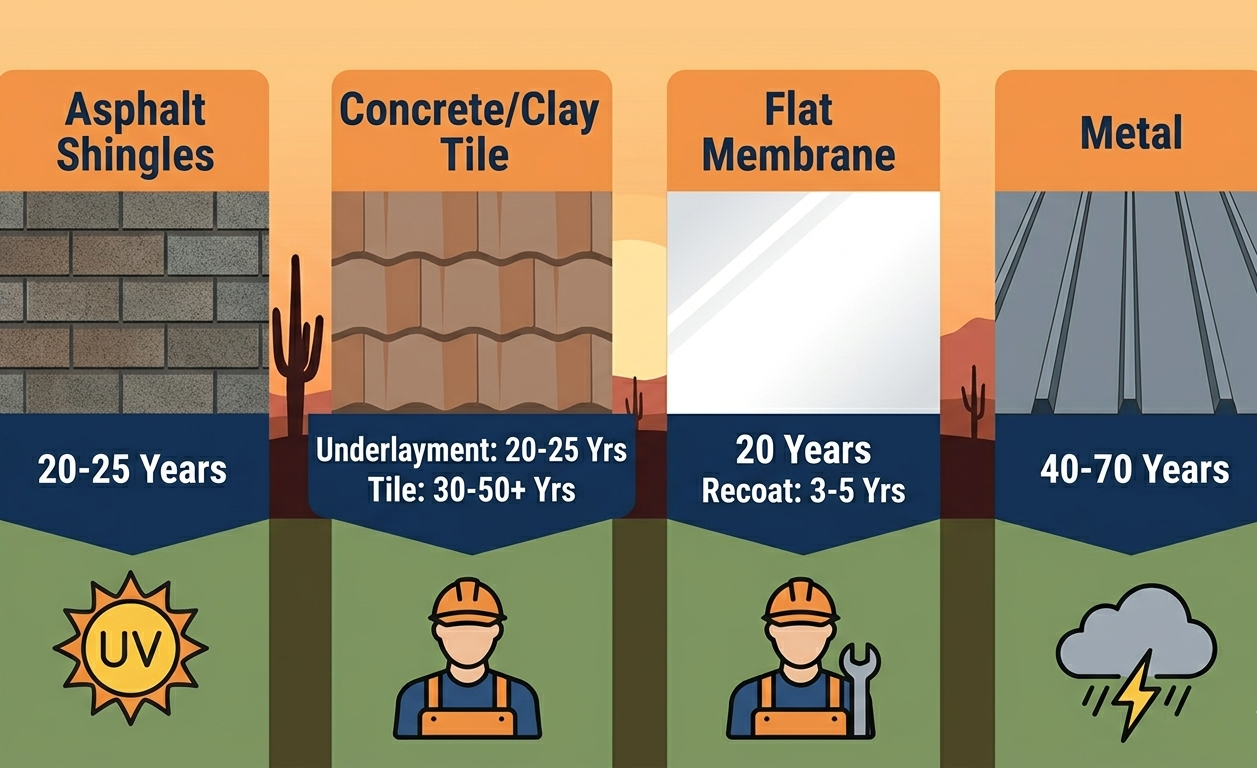
While traditional three-tab shingles are largely obsolete in Arizona, architectural or dimensional shingles remain common on older homes and budget-conscious roof replacements. In a moderate climate, a quality architectural shingle roof might last 25 to 30 years. In the Tucson area, you should plan on a lifespan of 20 to 25 years, depending heavily on:
Attic ventilation quality
Roof pitch and shingle color
Professional installation quality
The typical failure mode is severe granule loss, which leads to UV degradation of the underlying asphalt. By the time you can clearly see this shingle damage from the ground, the roof is often already past the threshold for a simple roof repair.
Concrete tile is the dominant residential roofing material in Arizona for good reason—the tile itself is extremely durable and handles desert heat exceptionally well. But here is what most homeowners do not know: the majority of tile roof replacements we perform in Tucson are not actually tile replacements. They are underlayment replacements.
The tile stays, but the felt or synthetic underlayment beneath it fails first.
Homeowners should plan for a professional underlayment inspection around the 20 to 25-year mark. A "re-underlayment" involves removing the existing tile, replacing the degraded underlayment, and reinstalling the original tile. Because no new tile is needed in most cases, this process extends the life of your roof substantially at a fraction of a full replacement cost. With proper maintenance, the concrete tiles themselves can easily last 30 to 50 years.
Clay tile outlasts concrete tile and handles intense thermal cycling even better. Premium clay tile installations in Arizona can genuinely last 50 years or more. However, the same underlayment caveat applies. Additionally, clay tile is more brittle than concrete, meaning foot traffic during maintenance and routine inspections must be managed with extreme care.
The most common residential flat roofing systems in the Tucson area are single-ply and two-ply modified bitumen membrane systems. Single-ply, two-ply, and hot mop systems all share a similar practical lifespan in Arizona—plan around the 20-year mark for a full roof replacement, regardless of which system you currently have.
Proactive maintenance matters enormously for flat roofs. A professional recoat every 3 to 5 years protects the membrane from UV breakdown, reflects solar heat, and meaningfully extends the system's useful life. A neglected flat roof that never receives a protective coating will rarely make it to 20 years, whereas a properly maintained one often goes comfortably beyond it.
Note on TPO: TPO is also available as a premium, low-maintenance option with a longer lifespan and superior heat performance, making it highly common in commercial applications. For most residential flat roofs in our area, though, a membrane system combined with regular recoating remains the standard approach.
Modified bitumen and hot mop are older flat roofing technologies still found on many homes across Tucson. Both options fall into the exact same 20-year replacement window as modern single-ply systems. Regular recoating every 3 to 5 years is the critical maintenance task here—it seals the surface, extends UV resistance, and protects the membrane from the extreme heat that would otherwise accelerate its breakdown.
A properly installed metal roof boasts the longest lifespan of any common residential roofing system in Arizona. It handles heat, UV rays, and monsoon wind gusts better than almost any alternative. The only major caveats are installation quality and the fastener systems used—a poorly installed metal roof will develop issues well before reaching its true potential.
Attic Ventilation: Trapped heat bakes shingles and underlayment from below, accelerating degradation from within.
Installation Quality: Even the highest-grade materials will fail early if installed poorly. Always work with a credentialed Tucson roofing contractor.
Maintenance History: Catching minor issues early through routine roof repair prevents them from snowboarding into emergency structural failures.
Roof Color and Pitch: Darker colors absorb more radiant heat, and lower pitches retain debris and water longer, causing them to age faster in the Arizona sun.
If you are unsure what type of roofing system protects your home or how many years of service it has left, West Coast Roofing is here to help. We provide homeowners in Tucson and the surrounding communities with comprehensive, honest assessments to help you determine whether you need a targeted roof repair or a long-term roof replacement.


 BēST Roofer Marketing