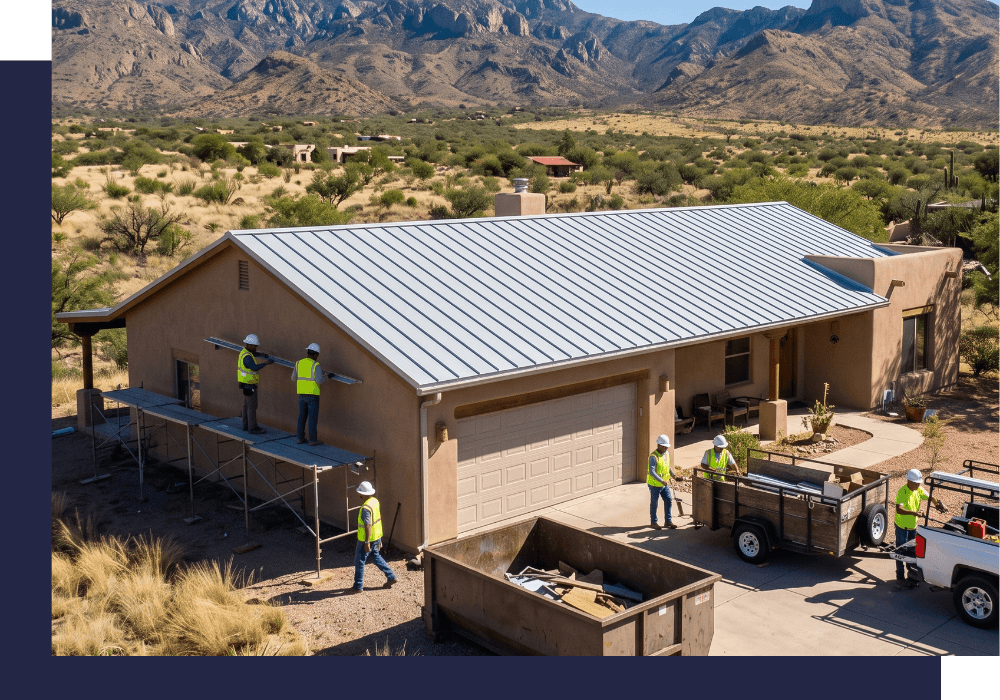
Your roof protects your home from intense sunlight, high temperatures, strong winds, and seasonal monsoon storms. In Tucson, Arizona, these conditions can gradually weaken roofing materials, damage flashing, and create leaks that may not be immediately visible.
Although regular maintenance and timely repairs can extend a roof’s lifespan, there comes a point when replacing the entire roofing system becomes the more practical long-term solution. Recognizing the warning signs early can help homeowners plan ahead, reduce the risk of interior damage, and make informed decisions about roofing materials.
If you are considering roof replacement in Tucson, understanding the process, available materials, and factors that influence your project can help you prepare for the work ahead.
Not every roofing problem requires a complete replacement. However, several warning signs may indicate that repairs are no longer enough.
Every roofing material has a different expected service life, depending on its quality, installation, maintenance, and exposure to weather. An older roof may become more vulnerable to leaks, material deterioration, and recurring repairs.
If you do not know when your roof was installed, a professional inspection can help assess its current condition and determine whether replacement should be considered.
A single leak may be repairable, but repeated leaks in different areas can indicate broader roofing problems. Damaged underlayment, deteriorating flashing, or widespread material failure may allow moisture to enter the home.
Repeated patching without addressing the underlying cause can lead to additional expenses. A roofing professional can evaluate whether targeted repairs or a complete roof replacement is the better option.
Cracked or broken tiles, deteriorated shingles, damaged flashing, and loose roofing components can compromise your roof’s ability to protect the structure.
After a strong monsoon storm, inspect your property from the ground for visible changes. Avoid climbing onto the roof, as damaged surfaces can be unstable and dangerous.
If you repeatedly pay for repairs, it may be time to compare the cost of continued maintenance with the value of a new roofing system.
The decision should consider more than the immediate repair bill. Roof age, the extent of damage, remaining service life, and the likelihood of future problems all matter.
Water stains on ceilings, peeling paint, damp attic insulation, and musty odors can indicate moisture intrusion. These signs do not automatically mean the roof needs replacement, but they deserve prompt attention.
A professional assessment can help identify the source of the moisture and determine the appropriate solution.
Tucson's desert climate creates specific challenges for roofing systems. Prolonged sun exposure can age certain materials, while large temperature changes may cause repeated expansion and contraction. Seasonal monsoon storms can bring wind-driven rain, debris, and sudden water intrusion.
These conditions make material selection, installation quality, flashing details, and drainage especially important.
For homes with flat or low-slope roofs, drainage problems can allow water to collect in vulnerable areas. Tile roofs also require attention to the condition of the tiles, underlayment, flashing, and roof penetrations.
A roofing contractor familiar with Tucson conditions can help identify the issues that matter most for your property's design and exposure.
The best material depends on your roof's structure, budget, appearance, maintenance needs, and local requirements.
Tile roofing is a familiar choice in many Arizona neighborhoods. Clay and concrete tiles can offer durability and an appearance that complements Southwestern architecture.
However, the tiles are only one part of the roofing system. The underlayment beneath them plays an important role in keeping water out. During a tile roof replacement in Tucson, the condition of the underlying materials should be carefully evaluated.
Tile weight, structural suitability, installation details, and product requirements should also be considered before selecting this option.
Asphalt shingles are available in different styles and price ranges, making them a common option for residential roof installation.
When evaluating shingles for Tucson homes, consider the manufacturer's climate guidance, wind rating, ventilation requirements, and expected maintenance. Proper installation is essential to help the roof perform as intended.
Flat and low-slope roofs require materials and installation methods suited to their limited slope. Depending on the structure, suitable systems may include modified bitumen, single-ply membranes, or other products designed for low-slope applications.
Drainage is particularly important. A replacement project should address existing drainage issues rather than simply covering the old roofing material.
The appropriate system depends on the building, current roof assembly, and manufacturer's specifications.
Understanding the process can help you know what to expect from a Tucson roof replacement contractor.
Initial roof inspection: The contractor assesses the existing roofing materials, visible damage, flashing, drainage, and other accessible components. The inspection helps determine the likely scope of work.
Project estimate and material selection: You should receive a clear explanation of the recommended work, material options, expected costs, and any exclusions. Ask whether underlayment, flashing, ventilation, disposal, and necessary repairs are included.
Preparation and removal: Depending on the selected system and project requirements, the existing roof may need to be removed. The contractor should protect landscaping and surrounding areas as reasonably possible.
Decking and underlying repairs: Once old materials are removed, the roof deck and other exposed components can be evaluated. Damaged sections may require repair before installation continues.
Installation: The new roofing system is installed according to the product specifications, applicable building requirements, and project scope. Flashing, penetrations, edges, and drainage details require particular attention.
Final inspection and cleanup: The contractor should review the completed work, remove project debris, and explain applicable warranties and maintenance recommendations.
The project timeline varies according to roof size, material, weather, accessibility, and the extent of repairs needed.
Choosing a contractor is just as important as selecting roofing materials. Before hiring a roof replacement company in Tucson, consider the following:
Avoid choosing a contractor based solely on the lowest price. A detailed proposal helps you compare the actual scope of work, materials, and protections being offered.
Roof repair may be appropriate when damage is limited, the roofing system is in generally good condition, and the underlying components remain serviceable.
Replacement may be more appropriate when the roof has widespread deterioration, recurring leaks, extensive underlayment failure, or damage that affects multiple areas.
A professional evaluation can help you understand both options. Ask the contractor to explain the condition of the roof, the risks of delaying replacement, and the expected benefits and limitations of repairing it.
The timeline depends on roof size, material, weather, accessibility, and the amount of underlying damage. A contractor can provide a more realistic schedule after inspecting the property.
Recurring leaks, widespread material damage, an aging roof, and frequent repair costs may indicate that replacement deserves consideration. An inspection can help establish the roof's condition.
There is no single best option for every home. Tile, shingles, and flat-roof systems have different costs, installation requirements, and maintenance needs. Your roof structure and property requirements should guide the decision.
If your roof is nearing the end of its service life, evaluating replacement before solar installation may help avoid removing and reinstalling panels later. Coordinate the roofing and solar work with qualified professionals.
Move vehicles away from the work area, secure fragile items that may be affected by vibration, and discuss access, pets, landscaping, and cleanup with your contractor before work begins.
A roof replacement is an important investment in your home's protection and long-term maintenance. By recognizing early warning signs, comparing suitable materials, and choosing a qualified contractor, you can make a more informed decision for your Tucson property.
If your roof is aging, leaking repeatedly, or showing visible damage, visit West Coast Roofing to learn more about roofing services and discuss your property's needs with the team. A professional assessment can help you understand whether repair or replacement is the appropriate next step.


 BēST Roofer Marketing
