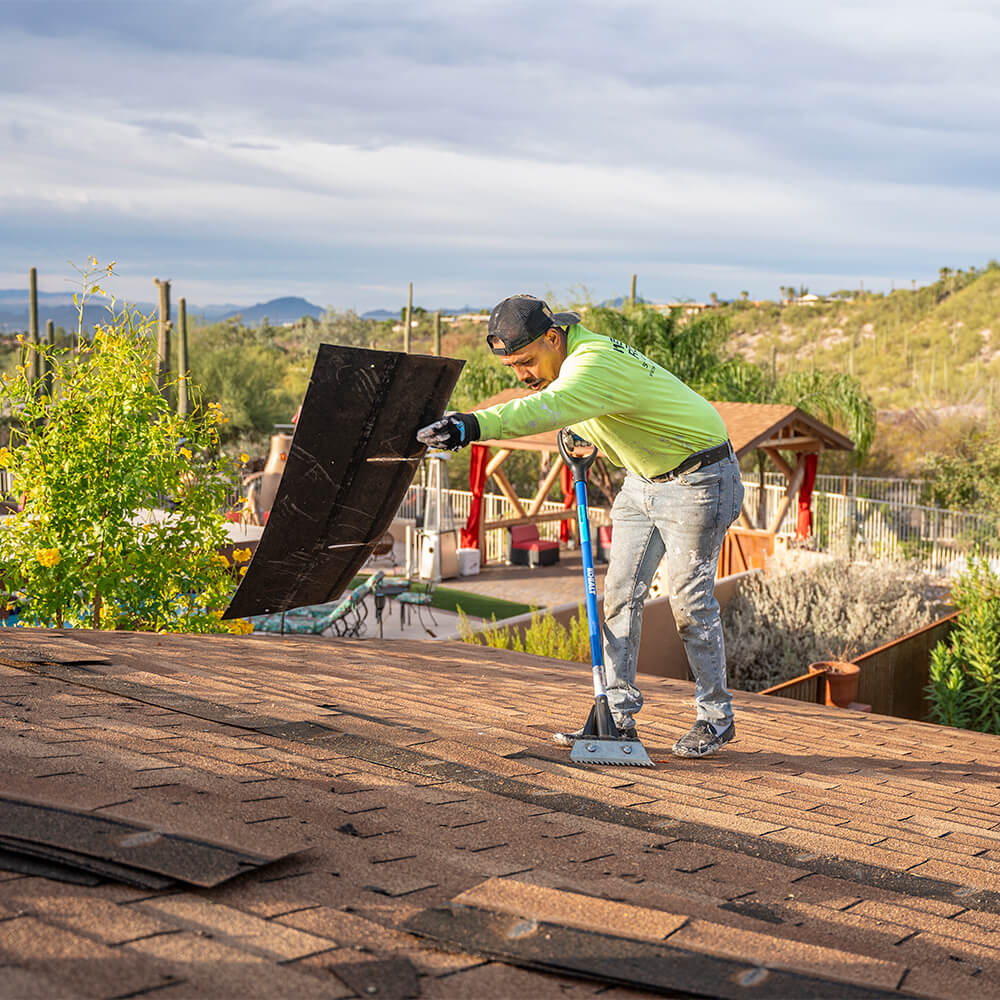
A small water stain on your ceiling, a cracked roof tile, or a few missing shingles may not seem urgent at first. But in Tucson, where intense sunlight and seasonal monsoon storms can put roofing materials under stress, ignoring these warning signs can lead to more extensive damage.
Timely roof repair can help address roofing problems before they affect more of your property. The key is identifying the source of the issue and choosing the right repair rather than treating only the visible symptoms.
Whether you're dealing with a roof leak, damaged tiles, deteriorating flashing, or problems with a flat roof, understanding the warning signs can help you determine when professional assistance is needed.
In this guide, we'll explore common roofing problems in Tucson, explain when emergency roof repair may be necessary, and discuss how to decide between repairing and replacing your roof.
Tucson's climate can affect different roofing materials in different ways. Regular maintenance and prompt attention to visible damage can help protect your property.
Roof leaks are among the most concerning roofing problems because water can affect ceilings, walls, insulation, and other building materials.
Leaks may develop around flashing, roof penetrations, damaged membranes, or deteriorated roofing materials. Water stains inside a building can indicate a roofing issue, although plumbing and other sources should also be considered.
If you notice moisture after rainfall, arrange a professional assessment to identify the source.
Tile roofs are common in Arizona, but individual tiles can crack, shift, or become damaged over time.
A damaged tile may expose vulnerable areas beneath it. The underlying roofing components may then become more susceptible to water intrusion.
If you notice cracked or displaced tiles, contact a roofing professional. Avoid walking on tile roofs, as doing so can damage tiles and create a safety hazard.
Asphalt shingles can deteriorate with age and environmental exposure. Strong winds may also displace or damage roofing materials.
Missing shingles, lifted edges, or visible deterioration can expose underlying roof components to the elements.
Prompt roof repair can help determine whether localized repairs are sufficient or whether broader deterioration needs attention.
Flashing helps protect vulnerable transitions and joints around roof edges, vents, skylights, and other penetrations.
If flashing becomes loose, damaged, or deteriorated, water may enter through these areas.
Because these problems can be difficult to identify from the ground, a professional roof inspection can help locate vulnerable areas and determine the appropriate repair.
Flat and low-slope roofs require suitable drainage to help manage rainfall.
Blocked drains, damaged seams, deteriorated membranes, and persistent standing water may contribute to roofing problems.
A contractor should assess the drainage system and underlying roof condition before recommending a repair, coating, or replacement.
Tucson's environment creates several conditions that can contribute to roof deterioration.
Extreme heat and UV exposure: Prolonged sunshine can gradually affect roofing materials, sealants, and protective surfaces.
Monsoon storms: Heavy rainfall and strong winds can expose existing weaknesses, damage roofing materials, and contribute to leaks.
Wind-driven debris: Branches and other debris may damage roofing surfaces or block drainage pathways.
Temperature changes: Repeated expansion and contraction can place stress on certain materials and roof connections over time.
These conditions make routine maintenance important. Scheduling an inspection when you notice a problem can help determine whether a repair is needed before the next period of severe weather.
Not every roofing issue is immediately visible from outside your property. Watch for these common warning signs:
These symptoms do not automatically mean you need a complete roof replacement. The appropriate solution depends on the cause, extent, and location of the damage.
A professional evaluation can help determine whether localized roof repair is sufficient.
Some roofing problems require prompt attention to help limit additional damage.
Consider contacting an emergency roof repair professional when you experience active water intrusion, significant storm damage, displaced roofing materials exposing the underlying structure, or other conditions that may leave the building vulnerable to further weather exposure.
If water is entering your property, keep people away from affected areas where ceilings or electrical systems may be unsafe. Do not climb onto a wet or storm-damaged roof.
Where possible, move belongings away from the affected area without putting yourself at risk. Contact a qualified roofing professional to discuss temporary protection and the next steps.
Not every roof issue is an emergency, but active leaks and substantial storm damage should not be ignored.
Roof repair may be appropriate when damage is limited to a specific area and the rest of the roofing system remains in suitable condition.
Examples may include replacing damaged shingles or tiles, repairing flashing, addressing localized leaks, or correcting certain flat-roof problems.
Roof replacement may be worth considering when deterioration is widespread, problems recur across multiple areas, or the roofing system has reached the end of its useful life.
The decision should be based on the roof's age, material, overall condition, repair history, and the extent of the damage.
A professional assessment can help you understand whether a targeted repair is appropriate or whether a more comprehensive solution deserves consideration.
A visible leak does not always identify the exact point where water is entering. Moisture can travel beneath roofing materials before appearing inside a building.
That is why effective roof repair begins with identifying the underlying cause.
A roofing professional can evaluate accessible materials, inspect vulnerable transitions, assess drainage, and determine what repairs may be required.
Before approving a project, ask for a clear explanation of the problem, the recommended solution, the work involved, and any applicable warranty information.
West Coast Roofing serves Tucson and surrounding areas. Visit West Coast Roofing to explore roofing services and discuss your property's repair needs.
Common signs include water stains, damaged shingles or tiles, deteriorating flashing, visible roof damage, and leaks after rainfall. A professional assessment can help identify the cause and determine the appropriate repair.
A roof leak should be assessed promptly, especially if water is actively entering the property. Delaying attention may allow moisture to affect additional building materials.
Contact a roofing professional promptly when significant storm damage, active water intrusion, or exposed roofing components leave your property vulnerable. Avoid accessing a damaged roof yourself.
In some cases, individual damaged tiles can be replaced or related localized problems can be repaired. The underlying roofing components should also be evaluated to determine whether additional work is needed.
Look for a contractor who explains the cause of the problem, provides a clear scope of work, discusses repair options, and answers questions about materials and warranties. A thorough evaluation is important before agreeing to major work.
Roofing problems can develop gradually or appear suddenly after a storm. In either situation, recognizing warning signs and arranging professional roof repair can help you understand the damage and protect your property.
The best solution depends on the roofing material, the extent of the problem, and the overall condition of the roof. Addressing the underlying cause is more effective than simply covering up visible symptoms.
Need professional roof repair in Tucson, AZ? Visit West Coast Roofing to explore roofing services and discuss your repair concerns. Taking action early can help you make a more informed decision about maintaining your roof.


 BēST Roofer Marketing
