A residential roofing warranty sounds like comprehensive protection, but the details matter enormously. Most homeowners do not read their warranty documents carefully until they need to file a claim, and that is when the gaps become apparent. Understanding what your warranty actually covers before you need a roof repair or a full roof replacement is well worth your time.
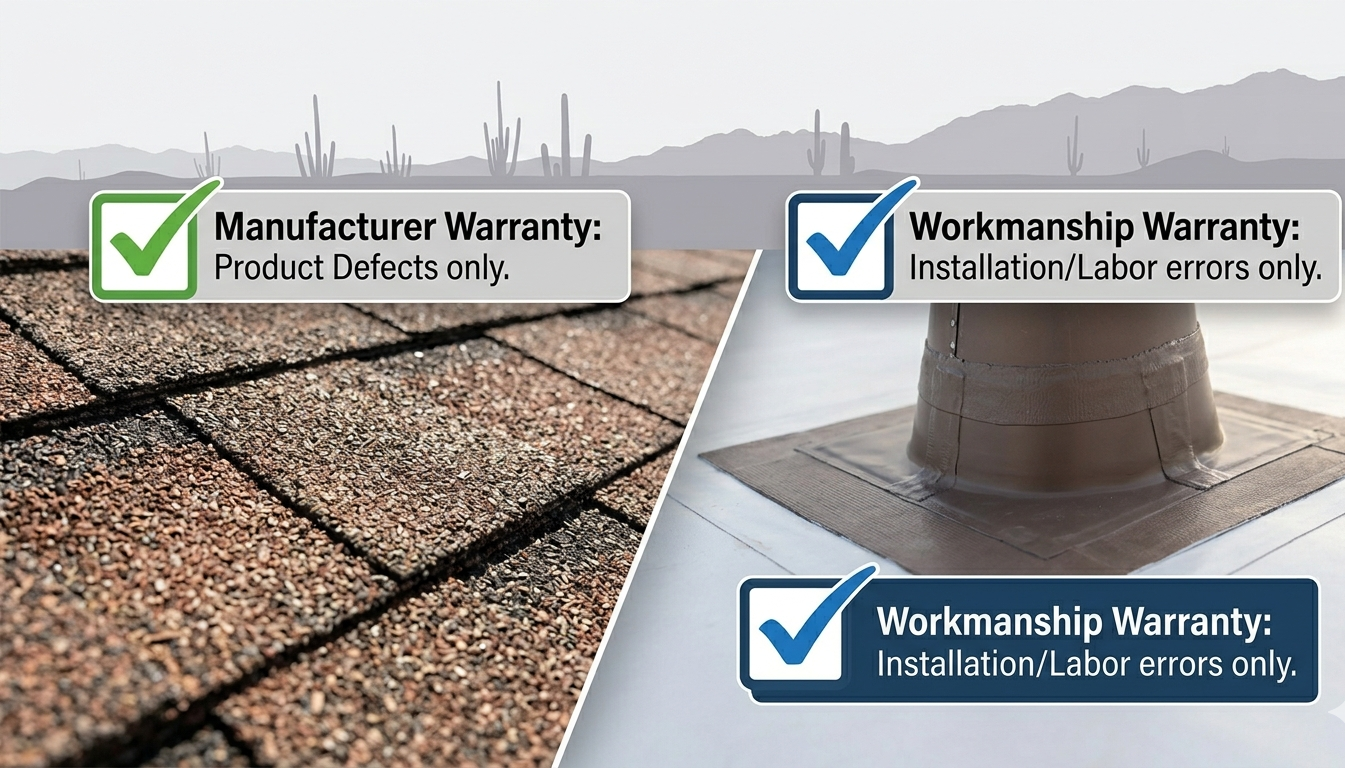
Every professional roofing project involves at least two separate warranties: the manufacturer warranty on the materials and the workmanship warranty from your Tucson roofing contractor. These cover entirely different issues and feature completely different claims processes.
The manufacturer warranty covers defects in the roofing materials themselves. If a shingle cracks, a flat roof membrane develops a manufacturing defect, or a tile fails prematurely due to a material issue, this is the warranty that protects you.
Important details most homeowners miss regarding material warranties:
Prorated Coverage: Most manufacturer warranties are prorated, meaning the coverage decreases over time. A 30-year shingle warranty does not mean full replacement value in year 25; it often means you receive only a fraction of the original material cost.
Certified Installation Requirements: Manufacturer warranties typically require installation by a certified contractor. If your roof was installed by someone who is not certified to install that specific product, the warranty may be completely void.
Registration Windows: Many warranties require official registration within a certain window after installation. If your contractor did not register the warranty, you may not have the coverage you thought you had.
Excludes Labor: Standard coverage is typically for materials only—the labor costs for replacement are often not included unless you have a premium warranty tier.
Some manufacturers offer enhanced warranty programs through certified contractors that provide much better coverage terms—including labor coverage, longer non-prorated periods, and wind or workmanship coverage. GAF's Golden Pledge and System Plus warranties are prime examples of this. These are generally only available through highest-tier certified contractors and are worth asking about specifically before your roof replacement begins.
The workmanship warranty comes directly from your Tucson roofing contractor and covers installation-related failures. This includes things like improperly sealed flashings, incorrect fastener patterns, or other installation errors that cause a roof to fail prematurely.
In Arizona, workmanship warranties are required by law to be a minimum of two years. However, that is the legal floor, not the industry standard. Many reputable companies offer five years or more.
When evaluating a contractor, read the specific terms:
Find out what is explicitly excluded from the coverage.
Check whether the warranty transfers to a new owner if you sell your Tucson home.
Understand what the claims process involves.
A Note on Contractor Longevity: A contractor who offers exactly two years and nothing more is meeting the bare legal minimum—it is wise to ask why they are not going further. Furthermore, a contractor who is no longer in business when you need to use your workmanship warranty provides you nothing, regardless of what was originally promised.
Warranties are designed to protect against product defects and installation mistakes, not external factors. The following scenarios are almost never covered:
Damage resulting from a lack of regular roof maintenance.
Damage caused by foot traffic, including from other contractors walking on your roof for unrelated work (like solar or HVAC servicing).
Storm damage caused by wind, hail, or monsoons—this falls under your homeowners insurance policy, not a manufacturer or workmanship warranty.
Normal wear and tear over time.
Damage resulting from improper repairs made by someone other than the original roofing contractor.
West Coast Roofing is a certified GAF Master Elite contractor, a designation that allows us to offer premium, enhanced warranty options that are completely unavailable through standard installers. When you get a quote for your home's residential roofing needs, ask us specifically about our available warranty tiers to ensure your investment is fully protected.


 BēST Roofer Marketing