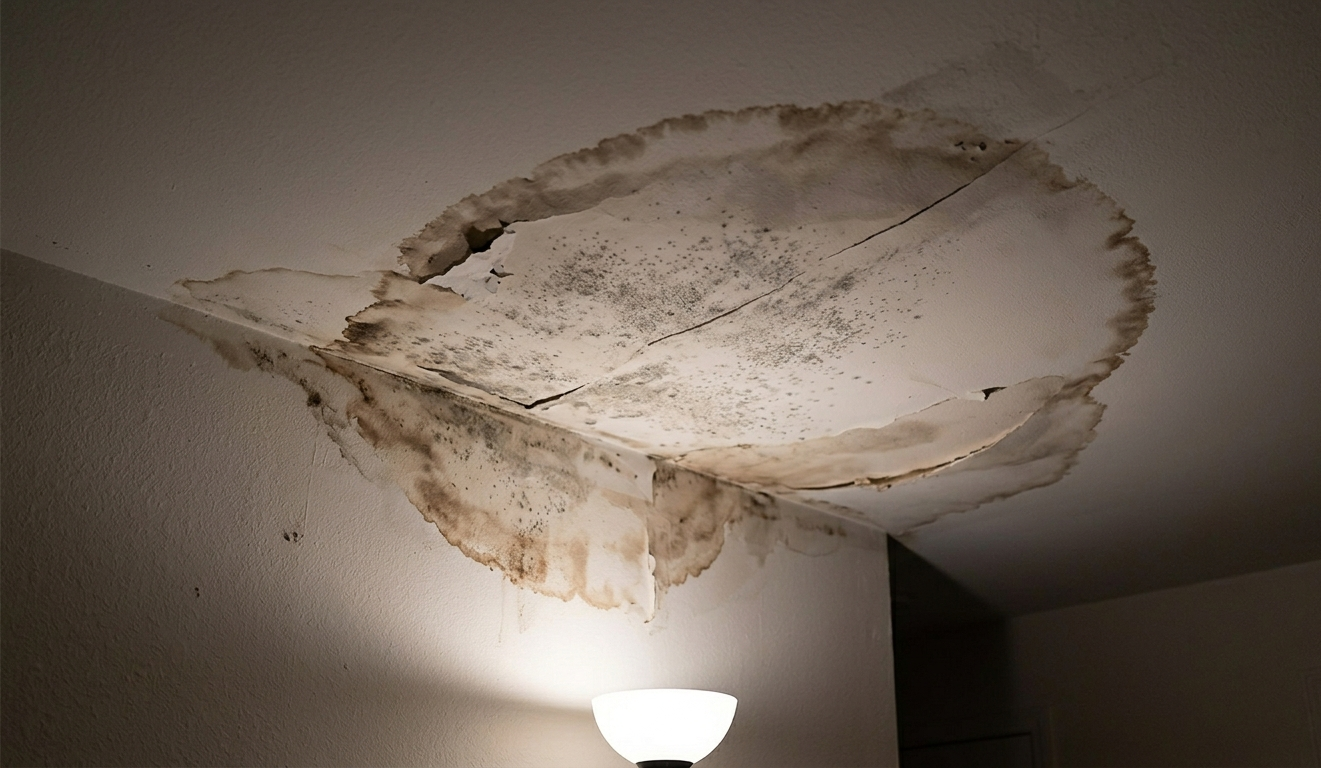
A minor roofing issue has a predictable trajectory if left alone. What starts as a small vulnerability—a lifted shingle, a crack in flashing, or a compromised seam—eventually allows water to reach the roof deck. From there, moisture works its way into the insulation, then the framing, and eventually becomes visible inside the home. By that point, what began as a few-hundred-dollar roof repair has often grown into thousands of dollars in water damage remediation on top of the roofing repair itself.
The math on deferred residential roofing maintenance in Arizona is particularly unforgiving because of our intense desert climate. A small issue going into the Tucson monsoon season is a much bigger, more expensive issue coming out of it.
A homeowner notices a slight discoloration on a ceiling after a heavy monsoon storm. They assume it is a one-time thing and do not follow up. The next season brings more rain, and the water stain gets bigger.
Eventually, they call a Tucson roofing contractor and find that a small flashing failure around a vent—a repair that would have cost $350 to $500 when first noticed—has resulted in widespread water damage to the roof decking, mandatory insulation replacement, and a drywall repair inside. The total cost is now several thousand dollars, and the original flashing failure still needs to be fixed.
This is not an unusual story. It is an incredibly common one.
The financial difference between routine maintenance and neglecting your roof is stark.
Estimated Costs for Minor Proactive Repairs:
Minor flashing repair: $150 to $500
Small shingle repair: $200 to $600
Flat roof seam repair: $300 to $700
Estimated Costs If Left Unaddressed Until Serious Water Damage Occurs:
Roof decking replacement (partial): $1,000 to $3,000
Insulation replacement: $500 to $2,000
Interior drywall repair: $500 to $2,500
Mold remediation (if moisture has been present long enough): $2,000 to $10,000+
None of these numbers include the immense stress, the major disruption to your home, or the potential long-term insurance implications of filing a water damage claim.
The main reason homeowners defer vital roof repairs is that they cannot see the problem from the ground, and it is not immediately affecting their daily life. Out of sight, out of mind.
The irony is that this is exactly what makes roofing different from most other home repairs—the structural damage accumulates invisibly beneath the surface until it simply cannot be ignored anymore.
A professional inspection every two to three years typically costs nothing if you work with a local company that offers free inspections. Minor repairs identified during a routine inspection, even if you pay for them entirely out of pocket, are almost always significantly less expensive than what deferred maintenance eventually produces.
The homeowners who spend the absolute least on roofing over the lifespan of their homes are the ones who address small things while they are still small.
If there is something on your roof that you have been meaning to look into, now is the time to act. West Coast Roofing offers completely free roof inspections and straight, honest answers about what needs immediate attention and what does not.


 BēST Roofer Marketing